
Stressed Woman
That was the diagnosis. It was fast. It was wrong. It could have killed her.

The first question they asked my sister a week ago when she walked into a medical clinic in Brooklyn with chest pain was whether she was a member.
She collapsed before she could answer.
By the time she arrived at NYU Langone’s emergency room, she could no longer move her arms or legs. Her speech had slowed into a slur. Her blood pressure would not stabilize. Her troponin, a marker of cardiac injury, registered at 976. Normal is under 14. A kidney infection from the previous week remained untreated.
Somewhere in those first hours, a physician opened her chart, saw years of sobriety and a prescription for anti-anxiety medication, and began constructing a theory of the case.
“You must be stressed?”
The question mark was grammatical courtesy. The verdict had already been written. A woman who could not move her limbs was, the chart explained, overwhelmed.
We see medical misogyny in old movie scenes: wandering diagnoses of hysteria, Victorian fainting couches, male doctors from another century dismissing women as irrational. Modern medical misogyny is quieter. More procedural. It operates through workflow and time pressure. For women with any documented history of anxiety or emotional distress, psychological explanations offer the shortest path to closure. Once that explanation enters the room, it reorganizes the facts around itself. Paralysis becomes panic. Instability becomes anxiety. The patient’s insistence that something is profoundly wrong reads less like evidence than personality.
The pattern is well documented. Women wait longer for pain treatment in emergency settings, and serious symptoms are more likely to be interpreted as emotional distress. Serena Williams had to fight, after delivering her daughter, to get doctors to investigate the blood clot threatening her life. Medicine retired the word hysteria which comes from the Greek word for womb, a catch-all for women’s unexplained suffering. It did not retire the reflex.
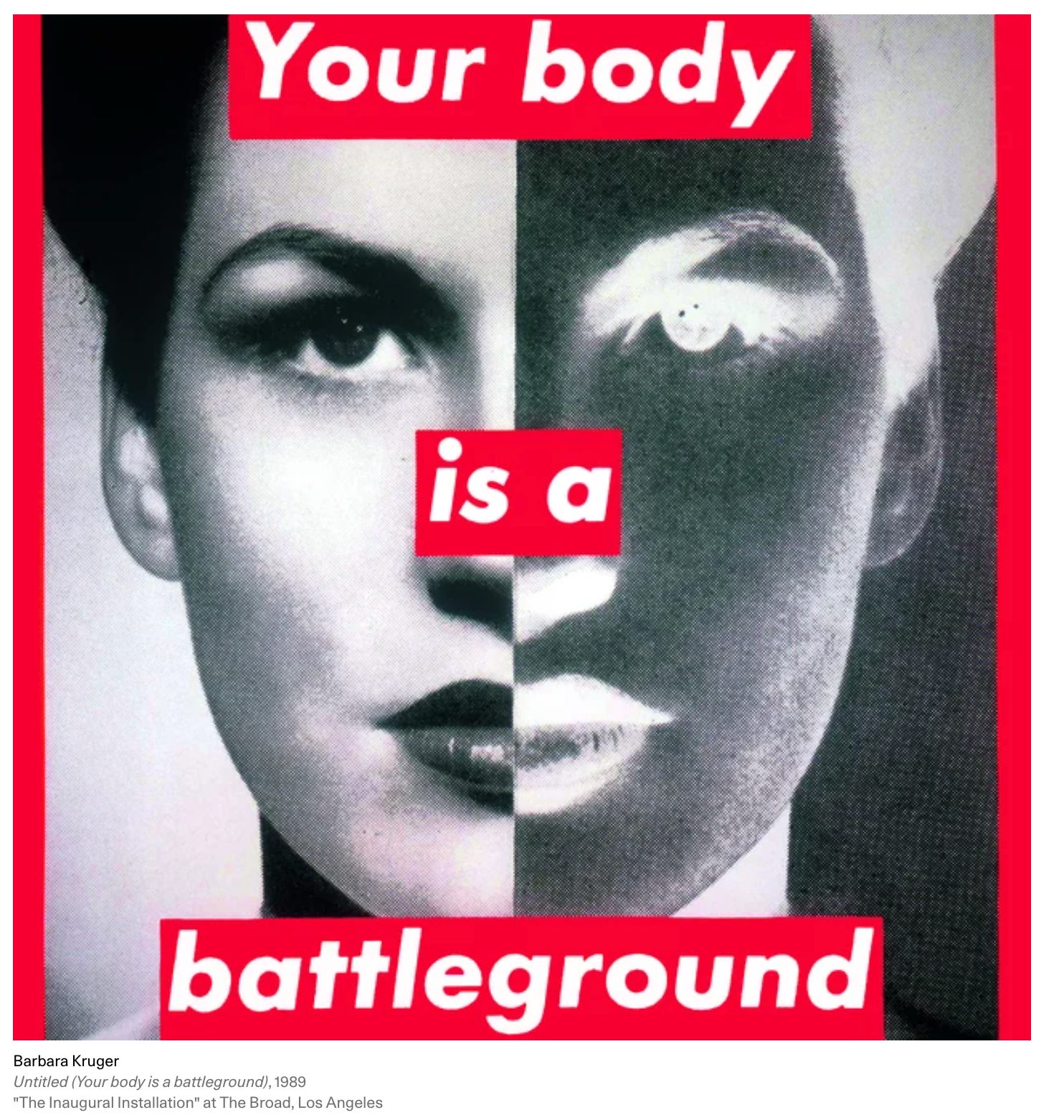
Of note, there was not a single female physician involved in my sister’s care at NYU Langone. This does not mean all male doctors are bad or misogynistic by any means (two male doctor friends were on speed dial with me the entire time and are superb human beings). It does mean that the male doctors treating my sister kept circling the same details: anxiety medication, sobriety, stress. Her daughters, both in their twenties, repeatedly asked about the unexplained paralysis, the collapsing blood pressure, the cardiac numbers seventy-five times normal. Their questions dissolved into the fluorescent air of the ER, acknowledged politely and folded back into the assumption already forming around their mother. For more than ten hours, despite the daughters’ repeated requests, the hospital brought no food and no fluids. When both finally arrived around midnight, my sister began to regain feeling in her limbs.
The thing that had been missing for almost a day was not a full diagnosis. It was water.
The cardiologist arrived Saturday morning. He explained that my sister had Takotsubo cardiomyopathy, a temporary weakening of the heart named after a Japanese octopus trap because the stunned heart balloons into a similar shape.
He seemed delighted by the etymology.
He spent less than fifteen minutes in the room.
A man so interested in the origins of the trap that he did not notice he was building one.
He discharged my sister with blood pressure still in dangerous territory. The paralysis was filed under unclear. The kidney infection belonged to someone else’s department. The drug that was the engine of everything that had happened was never mentioned.
The confidence of that discharge was life-threatening.
Two days later, my sister was back in an emergency room, this time at Weill Cornell. The institutional culture was visibly better: calmer, more coordinated, more attentive. But even there, the structure of care remained episodic. The immediate crisis was treated. The underlying cause floated outside the formal boundaries of the visit.
This is not a malfunction. It is the design.
American emergency medicine runs on the Jiffy Lube model. You pull in. They change the oil. If the engine is seizing, different location. The ER determines whether you will die in the next several hours, and if the answer is probably not, the transaction ends. What follows is the patient’s problem: calls to doctor’s offices that route to call centers, call centers staffed by non-medical operators reading AI-generated scripts, scripts that always begin with what insurance you have and practically never end with an appointment on a timeline that makes any clinical sense. Cardiology handles the heart. Nephrology handles the kidneys. Dermatology now handles far more than skin. If the underlying cause exists between categories rather than within one, the system can struggle to perceive it at all.
The burden of coherence has migrated onto the sick themselves.
This fragmentation is not merely exhausting. It is expensive. Two ambulance rides, two CT scans, two echocardiograms, two extended emergency-room visits, an overnight admission: somewhere between $30,000 and $53,000, before the second emergency-room visit that a correct discharge on day one would have prevented. Integrated care models have shown for decades that coordinated medicine lowers downstream costs while improving outcomes. The argument for whole-person medicine is not idealistic. It is actuarial.
What solved the mystery was not an elite procedure or technological breakthrough. It was one cardiologist asking one obvious question.
My cousin, one of the country’s finest cardiologists, called a colleague at Weill Cornell. The physician she reached, also a woman, asked my sister to walk through every medication she was taking, including anything recently prescribed by another provider.
What are you putting in your body?
My sister had been dealing with chronic kidney infections for years. A dermatologist had separately prescribed oral minoxidil* for hair strengthening, a drug migrating quietly from cardiovascular medicine into cosmetic treatment with surprisingly casual oversight. In some patients, minoxidil can destabilize blood pressure and suppress cardiac function. Chronic infection met drug-induced cardiac stress. The result was Takotsubo cardiomyopathy — the very condition the first cardiologist had named without any apparent curiosity about its cause.
Stop the drug. The symptoms began resolving.
One question. On day one, it costs nothing. On day five, it saves a life.
My sister is recovering partly because she had advantages most people do not: a cardiologist in the family, daughters confident enough to keep pushing after being dismissed, the resources to leave one hospital and demand another opinion at midnight. Increasingly, the American healthcare system assumes this kind of self-advocacy as a baseline. Patients are expected to coordinate records, reconcile specialists, challenge conclusions and escalate failures while sick and frightened.
Which returns us to the word itself.
Patient comes from the Latin patiens: to suffer, to endure, to undergo. Not the one who acts. The one acted upon. No other word in the medical vocabulary works this way. The physician is not asked to be doctorly. The nurse is not asked to be nurselike. Only the person who needs help receives, through their own title, a behavioral directive.
The word health comes from the Old English for wholeness. Care from the word for watchful concern on another’s behalf. Together they should describe attending to a person’s completeness with sustained attention until they can hold it themselves again.
My sister walked into a clinic with chest pain. She passed through two emergency rooms at world-class hospitals, where physicians looked at a woman who could not move her limbs, whose blood pressure was collapsing, whose cardiac markers were seventy-five times normal, and concluded she was stressed.
The first question was about her membership (a billing question). The last, the one that saved her, was about her medication list (a care question).
That is not a coincidence. That is a system designed by humans that humans could redesign. We could re-engineer the system to care for the whole person and not add to women’s physical burden by defaulting to out of date notions of our emotions and psychology. This would be better for people receiving care, care-takers, and even insurance companies.
We do know how to close this gap. Coordinated care, shared records that the person receiving care owns, medication reconciliation, a physician responsible for the whole picture before the patient leaves the building.
It is not a knowledge problem. It is a decision problem. And we keep making the wrong one.
Postscript:
*Oral minoxidil is not a casual hair-loss drug. In the U.S., it carries a boxed warning because it can cause serious cardiac complications, including fluid retention, pericardial effusion, and even cardiac tamponade; it was originally developed for severe hypertension, not routine cosmetic use. That doesn’t mean it should never be used, but it does mean it should be prescribed thoughtfully, monitored carefully, and taken seriously as a medication with real systemic risks.
so sorry about your sister's ordeal. so unnecessary. thank you for calling this out. so much opportunity for improvement. xoxo🛸🪽🙏🏼💫🌈
Lexi, thank you for sharing this, wow, what your sister endured is both heartbreaking and infuriating. The fact that one simple question, asked on day one, could have prevented days of suffering and thousands of dollars in unnecessary care says everything about where our healthcare system has lost its way. We should not have to "be our own advocates" just to receive basic, whole-person care. But that's something I say all the time to myself and those I care about, because of situations like this. Your point about medical education resonates deeply. Empathy, curiosity, and the willingness to ask the obvious question are not soft skills — they are clinical skills. And while I'm so glad she had family, resources, and specialists in her corner not everyone is that lucky. That's what stays with me. So many people are navigating this system alone, without the knowledge or resources to push back. We can and must do better. Wishing your sis a speedy and healthy recovery 💖